
Middle East Politics

Political Risk in the Middle East

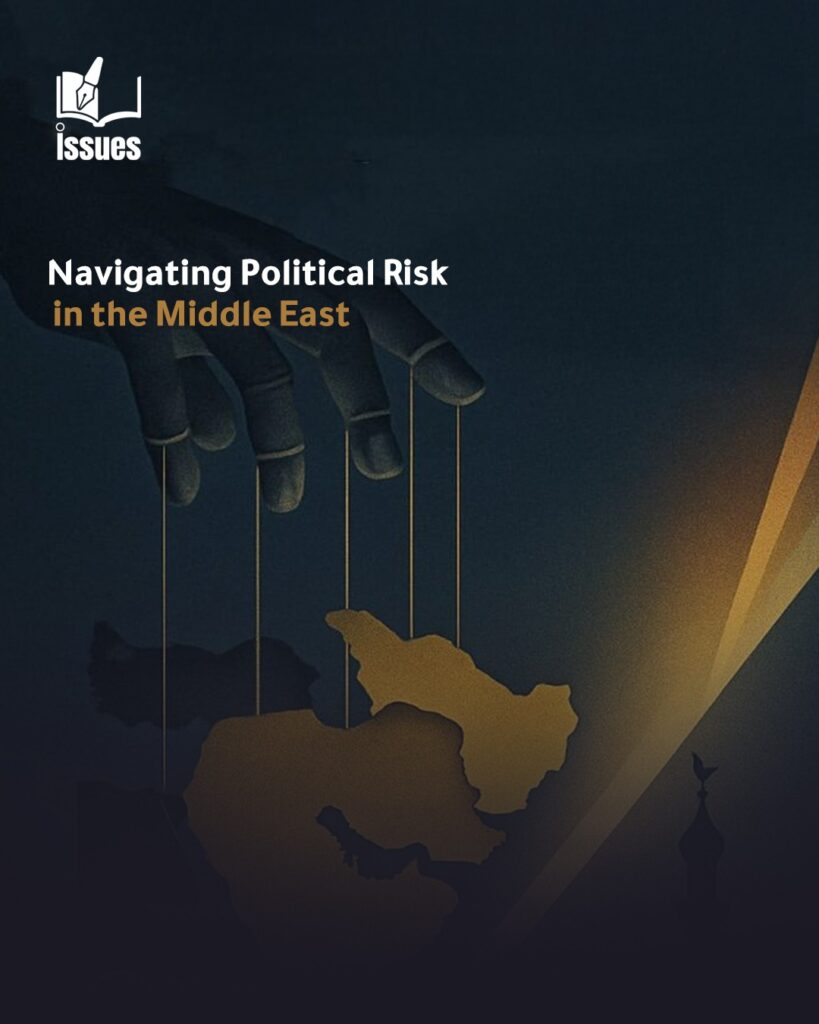
Navigating Political Risk in the Middle East

The Middle East remains a region of both opportunity and uncertainty that cause political risks. Rapid political shifts, sectarian tensions, and economic challenges make the ability to assess political risk not just useful—but essential. Political risk refers to the likelihood that political decisions, events, or conditions will affect the stability of a region and, by extension, influence investment, development, or humanitarian operations. In the Middle East, this can range from regime changes and foreign policy shifts to protests, sanctions, and armed conflict. How to define international relations To navigate this risk effectively, organizations must combine local context with data-driven forecasting. This involves: 2. Understanding internal social and economic pressures 3. Evaluating the credibility and capacity of state institutions 4. Engaging with local experts and civil society Political risk analysis is not about predicting the future with certainty—it’s about preparing for it with insight. For NGOs, investors, and governments operating in the region, informed preparation is the best form of resilience. Read about theory and practices in Gaza City

Navigating Political Risk in the Middle East Read More »
connecting theory and practice copy

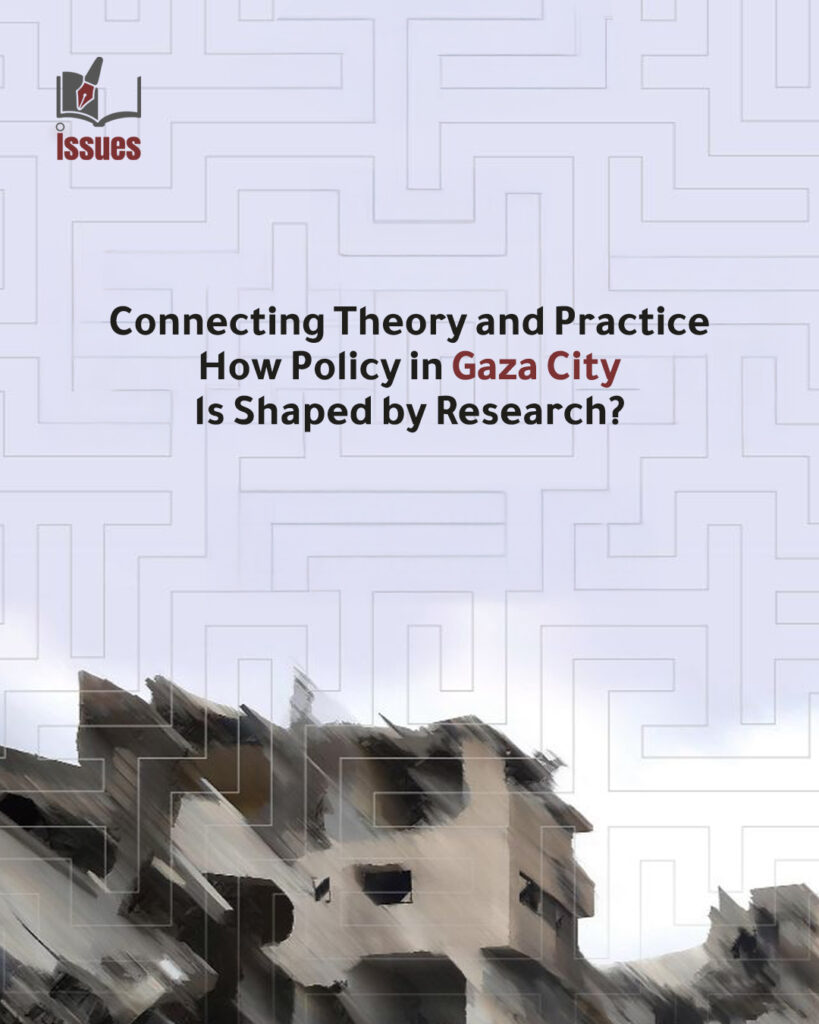
Connecting Theory and Practice: How Policy in Gaza City Is Shaped by Research?

The importance of scholarly study is frequently most apparent during uncertain and crisis-filled times where you need to understand the process of connecting theory and practice . With its intricate social, political, and humanitarian realities, Gaza City provides a potent illustration of the intersection of theory and practice as well as the way that research may influence practical decisions that have an impact on thousands of people. The Significance of “Bridging the Gap” Sometimes academic research is written off as being too abstract or unrelated to people’s real-world experiences. However, in highly charged contexts, evidence-based research can provide policymakers with clarity and guidance. Credible research becomes more than just a resource in situations like Gaza, where every policy choice has urgent social and humanitarian repercussions. Research Advancing Urban and Humanitarian Policy in Gaza City Studies conducted in recent years by academics and regional organizations have had a direct influence on Gaza City’s development and humanitarian plans. For instance: Urban Infrastructure & Housing After times of the Israeli occupation, there is an urgent need for housing reconstruction, according to research from nearby universities. These findings were put to use by local governments and international assistance organizations to prioritize reconstruction efforts in certain displaced neighborhoods. Public Health & Water Security Research on the salinity and contamination of the aquifers in Gaza City provided policymakers with concrete proof of the health hazards. The design of water treatment projects and the implementation of clean water distribution programs by NGOs were both impacted by this scholarly effort. Youth and Education Policy where new programs for education and mental health support were based on academic surveys that documented the psychosocial effects of conflict on Gaza’s youth. Schools and community centers were able to implement trauma-sensitive teaching methods thanks to evidence-based suggestions. Discover key theories of international relations https://online.norwich.edu/online/about/resource-library/key-theories-international-relations Takeaways: From Study to Practice The example of Gaza demonstrates that three main advantages arise when scholars and decision-makers work together: 1. Evidence Takes the Place of Guesswork: In a field where political narratives frequently predominate, academic research provide clarity. 2. Local Expertise Is Crucial: Locally grounded research guarantees that policy choices represent the true needs of communities. 3. Action Gains Legitimacy: Public trust rises and mobilizing international support is made simpler when governments or NGOs base their decisions on reliable information. Going Ahead: Fortifying the Connection The lesson is clear for Gaza City and many other areas dealing with political and humanitarian issues: it is imperative that theory and practice be connected. It necessitates ongoing communication between communities, politicians, and scholars. Universities, think tanks, and non-governmental organizations need to continue to be involved—not only as authors of studies, but also as collaborators in forming life-altering decisions. Final Thought Gaza City serves as an example of how research may enter the realm of policy and transcend the classroom. Bridging the gap between theory and practice is no longer merely an intellectual exercise; it is a lifeline in a world where decisions have such high costs. Read about the ethics in analyzing public policy https://issu-es.com/public-policy-studies/

Connecting Theory and Practice: How Policy in Gaza City Is Shaped by Research? Read More »